
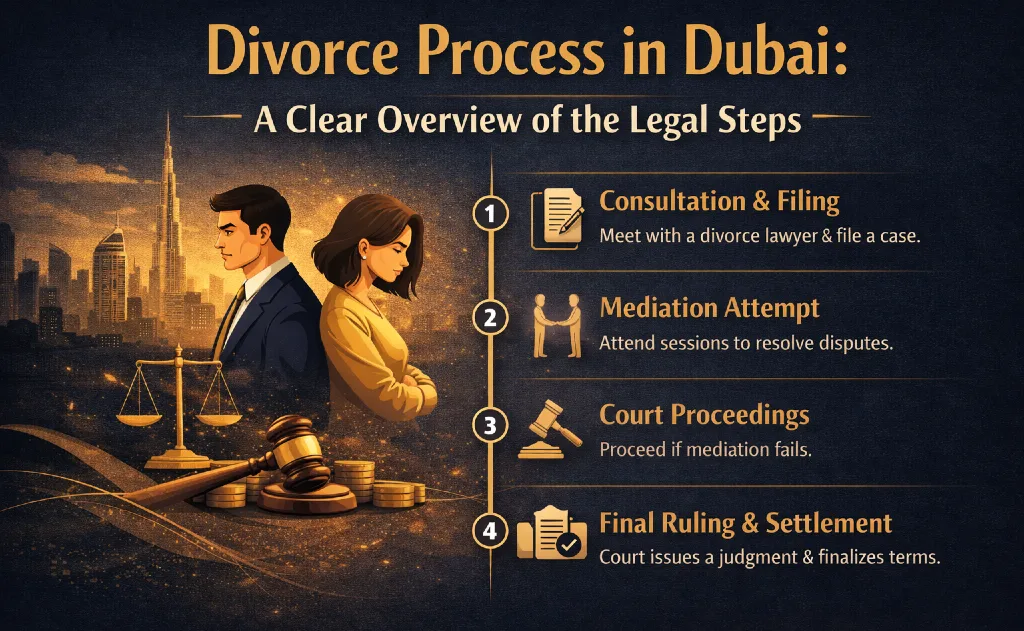
Divorce Process in Dubai is handled through a structured legal process, but for most people, the difficulty lies in understanding what actually happens at each stage. The process itself is defined by law, yet the experience can vary depending on the circumstances of the parties involved.
Some individuals approach divorce after long periods of uncertainty. Others may already be in the middle of a dispute and need clarity on what the next steps look like. In both situations, understanding how the process works helps reduce confusion and allows decisions to be made more carefully.
This article provides a clear and practical overview of how divorce cases are generally handled in Dubai, the stages involved, and the key issues that tend to arise.
How Divorce Is Regulated in Dubai
Divorce Process in Dubai is governed by UAE personal status laws, which regulate matters such as marriage, separation, custody, and financial obligations.
The legal framework applies differently depending on factors such as:
- if both parties agree to the divorce
- whether there are children involved
- the financial position of each party
- the applicable legal system based on nationality or jurisdiction
Because of this, no two cases follow exactly the same path. However, most cases still move through a broadly similar structure.
Types of Divorce in Dubai
Understanding the type of divorce is important because it affects how the process will unfold.
Amicable Divorce
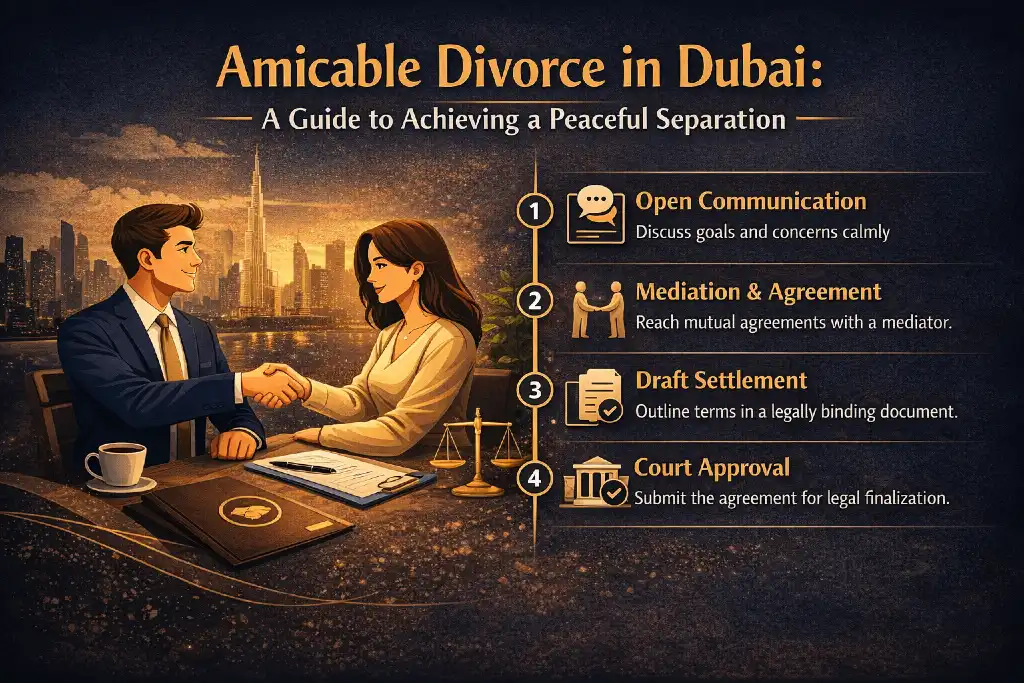
What Makes a Divorce “Amicable”?
Mutual consent, no-fault filing at Personal Status Court. Faster (1-3 months) than contested.
An amicable divorce occurs when both parties are generally in agreement on the main issues, including:
- separation terms
- financial arrangements
- child custody and visitation
These cases tend to progress more smoothly, as there is less need for dispute resolution or court intervention.
Contested Divorce
A contested divorce arises when there is disagreement between the parties.
This may involve disputes over:
- custody or visitation rights
- financial support or obligations like alimony
- division of responsibilities like guardianship
In these cases, the process may take longer and involve more formal legal steps.
Divorce Process in Dubai (Step-by-Step)
Although every case is different, most divorce matters in Dubai follow a general sequence of stages.
- Initial Review of the Situation
The process typically begins with understanding the current situation clearly.
This includes:
- reviewing the relationship and circumstances
- identifying key legal issues
- assessing available documentation
At this stage, the focus is not on taking action immediately, but on gaining clarity about the position.
- Family Guidance or Reconciliation Stage
Before a case proceeds to court, it is usually referred to a family guidance or reconciliation stage.
This stage aims to:
- explore whether the matter can be resolved amicably
- allow both parties to express their positions
- reduce the need for formal litigation
In some cases, an agreement may be reached here. In others, the matter proceeds further.
- Filing the Case
If no agreement is reached, the case may move to formal proceedings.
This involves:
- submitting an application before the competent court
- outlining the legal position
- providing supporting documents
This step marks the formal start of the legal process.
- Ongoing Discussions and Settlement Attempts
Even after filing, many cases continue to involve discussions between the parties.
This may include:
- negotiation
- partial agreements
- structured settlement drafts
Some cases are resolved at this stage, while others continue to court review.
- Court Proceedings and Judgement
If the matter is not resolved through agreement, the court will review the case.
This includes:
- examining evidence and documentation
- considering legal arguments
- assessing family and financial circumstances
A judgement is then issued based on the applicable law.
Key Issues Considered in Divorce Cases
Divorce cases in Dubai often involve several interconnected issues.
Child Custody and Visitation
Where children are involved, custody becomes a central issue.
The court generally considers:
- the best interests of the child
- stability of living arrangements
- practical considerations affecting care
Visitation rights are also defined to ensure ongoing contact with both parents where appropriate.
Financial Support and Obligations
Financial matters may include:
- support for children
- ongoing financial responsibilities
- other related obligations
These issues depend on the circumstances of the parties and the applicable legal framework.
Housing and Living Arrangements
In some situations, housing arrangements form part of the discussion, particularly where children are involved or where one party requires continued accommodation.
Documentation and Evidence
Documentation plays a key role in divorce cases.
This may include:
- financial records
- communication between parties
- supporting documents relevant to the case
Clear documentation helps present a more structured and accurate position.
Common Questions About Divorce in Dubai
Individuals often seek clarity on practical aspects of the process, such as:
- How long will the process take?
- Will the case go to court?
- How are custody decisions made?
- What financial obligations may arise?
- Can the matter be resolved without conflict?
The answers depend on the specific facts of each case. There is no single outcome that applies universally.
Common Challenges in Divorce Cases
Certain issues can make the process more complicated than expected.
These include:
- lack of clear agreements between parties
- incomplete or missing documentation
- delays in taking appropriate steps
- misunderstanding of legal rights
- emotional escalation affecting decision-making
A structured approach often helps reduce these challenges.
Importance of Timing and Preparation
Timing can play an important role in how a divorce matter develops.
Taking steps too early without understanding the situation may create unnecessary complications. On the other hand, delaying action for too long may affect the available options.
Preparation is equally important. Having a clear understanding of the facts, documents, and possible outcomes allows the process to be handled more effectively.
How the Process Affects Individuals
Divorce is not only a legal process. It often has broader implications, including:
- changes in family structure
- financial adjustments
- emotional and practical considerations
Understanding the legal framework helps individuals manage these changes with more clarity.
Why Understanding the Process Matters
Having a clear view of how divorce works in Dubai helps individuals:
- approach the situation with better awareness
- avoid unnecessary procedural mistakes
- make informed decisions at each stage
- reduce uncertainty during the process
Even where the situation is straightforward, clarity can make a significant difference.
When Legal Guidance Becomes Relevant
Many individuals consider seeking legal advice when:
- the situation becomes unclear
- discussions between parties are not progressing
- there are concerns about custody or finances
- they need to understand their position before taking action
Understanding the process early often allows for a more measured and structured approach.
if your facing a family matter or divorce related cases consulting a family or divorce lawyer will support your interest.
FAQ Section
Is alimony mandatory?
Not for amicable if waived.
Expats: Sharia or home law?
New law allows choice.